
Why Bold Training Often Leads to Difficult Personal Life Epiphanies

Is It Normal for Professional Development to Disrupt Your Personal Life?
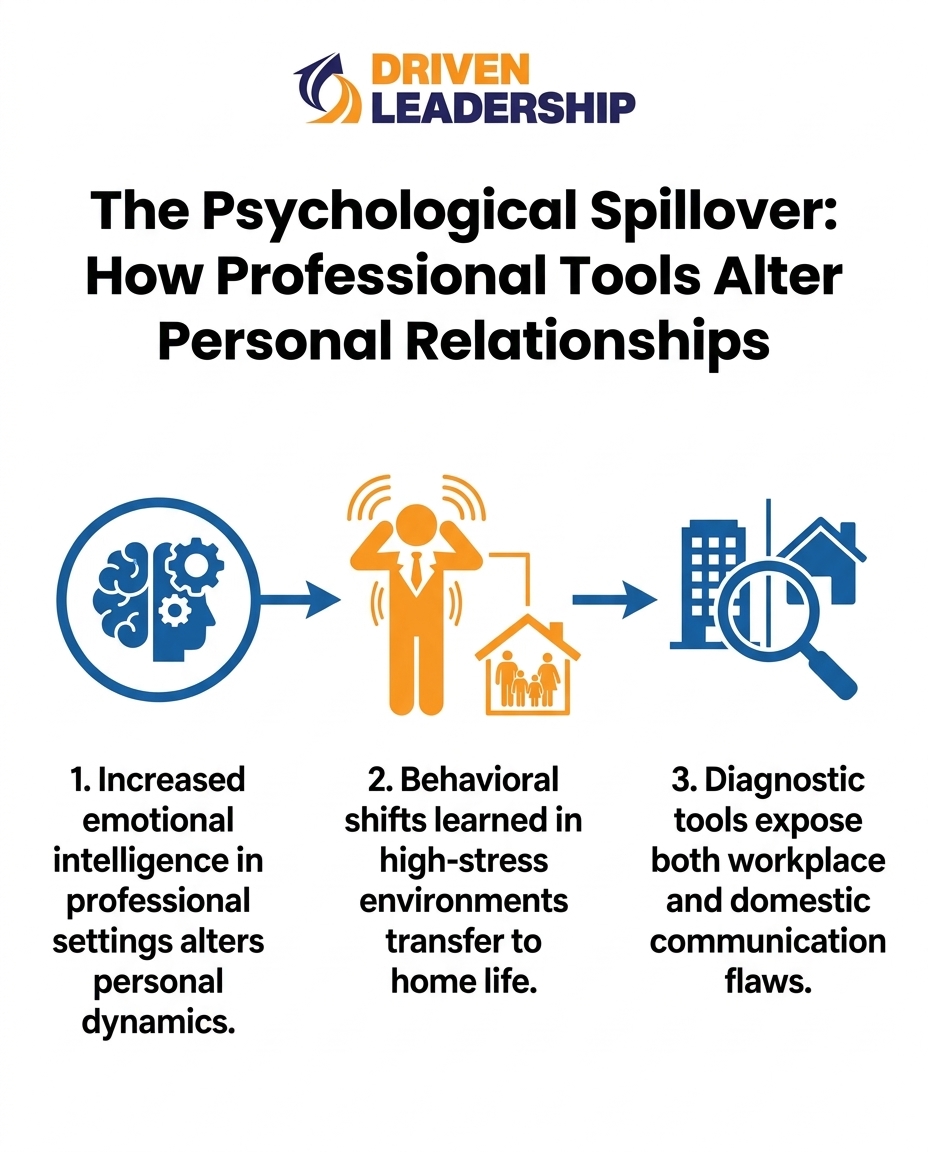
Are you wondering why bold training often leads to difficult personal life epiphanies just when your only goal was to improve your workplace performance? You are not alone in this unexpected realization. Many executives sign up for professional development to fix team dynamics, only to find the training shines a blinding spotlight on their own personal relationships. The truth is, genuine growth cannot be compartmentalized into a neat corporate box. When you break down professional defense mechanisms in a high-stress learning environment, it inevitably alters your home life dynamics.
If you are navigating this transition, understanding the core principles of BOLD training is the first step toward lasting growth. A common search pattern we see from executives is "leadership training personal life impact" because they feel overwhelmed by these sudden, stark realizations about their marriages, family dynamics, and personal boundaries. This psychological spillover is actually a feature of true holistic growth, not a negative side effect.
When you start upgrading your emotional intelligence at the office, the contrast between your new skills and your old personal habits becomes impossible to ignore. You begin to notice the exact same dysfunctions you just diagnosed in your management team playing out at your dinner table.
Early signs of this psychological spillover include:
• Heightened awareness of passive-aggression: You suddenly recognize poor communication habits from family members that you previously ignored.
• Zero tolerance for avoidance: Issues with your spouse that you used to sweep under the rug now feel urgent and necessary to resolve.
• Boundary exhaustion: You realize you have been letting personal relationships drain your energy in ways you would never allow from an employee.
• Communication frustration: You feel impatient when family members do not use the clear, direct communication frameworks you just learned.
Recognizing these patterns is the first phase of authentic leadership. The disruption you feel at home is proof that the concepts are actually taking root in your subconscious.
Why Immersive Environments Strip Away Professional Masks
There is a massive difference between passive learning and experiential, high-stress training environments. Unlike standard passive corporate seminars that allow you to sit quietly in the back row and take notes without changing your behavior, Driven Leadership's immersive training creates intense environments that force genuine behavioral shifts. You cannot fake your way through an immersive experience.
Prolonged intensity forces leaders to drop their carefully curated professional personas. When you are put under pressure in a simulated leadership crisis, your executive mask slips. The communication tactics you use to hide your insecurities are stripped away, revealing your raw, default reactions. Overcoming deep-seated career roadblocks often requires dismantling the exact same behavioral barriers that exist at home.
During a spring session, one participant who struggled with deep personal and professional roadblocks attended an immersive workshop. Because the environment demanded total participation, it provided the support and tools needed to elevate their performance, enabling them to successfully acknowledge and overcome previous roadblocks that had held them back for years. This is the power of experiential learning—it rewires your default settings.
If you are ready to stop hiding behind a corporate persona, an advanced leadership program will push you past the boundaries of traditional management theory and into real behavioral transformation.
The Vulnerability of True Leadership
Genuine behavioral shifts require vulnerability. You cannot fix a communication flaw until you admit it exists, and immersive training forces that admission. Removing the "executive mask" exposes underlying flaws that affect every interaction you have, both at work and at home.
• Focuses on theoretical concepts and slideshows. — Immersive Leadership Training: Focuses on experiential exercises and real-time feedback.
• Allows participants to maintain their professional masks. — Immersive Leadership Training: Strips away defense mechanisms through high-stress scenarios.
• Results in temporary motivation that fades in weeks. — Immersive Leadership Training: Creates lasting behavioral shifts that transfer to personal life.
• Addresses surface-level management tactics. — Immersive Leadership Training: Addresses deep-seated psychological barriers and insecurities.
Once that mask comes off, the emotional intelligence and self-awareness gained naturally transfer to your home life routines. You stop acting like a boss and start acting like an authentic leader.
Navigating the Internal Fog Before a Personal Epiphany
When new leadership tools clash with old personal habits, the immediate result is rarely clarity. Instead, you enter a period of internal confusion and emotional exhaustion. You know your current personal dynamics are flawed, but you have not yet figured out how to apply your new professional tools to fix them.
Much like the prolonged overcast seasons in the Pacific Northwest, you might experience a long stretch of internal fog before a sudden break in the clouds brings total clarity. During this gray period, everything feels heavy. Conversations with your spouse feel unusually difficult. Your patience with your children might run thin. You are experiencing cognitive dissonance—your brain is trying to reconcile the highly effective leader you are becoming with the passive or reactive person you have historically been at home.
This reflection period frequently aligns with the mid-fall reflection period before end-of-year holiday stress amplifies relational dynamics. As the year winds down, the pressure to resolve these internal conflicts peaks. This discomfort is a mandatory phase of genuine personal development. You cannot skip the fog if you want the clarity.
What to expect during the internal fog:
• Emotional fatigue: Your brain is burning extra calories trying to process new behavioral frameworks.
• Hyper-analysis: You find yourself over-analyzing casual conversations with friends and family.
• Isolation: A temporary feeling that your family does not understand the "new" you.
• Sudden flashes of insight: Random moments where a long-standing marital issue suddenly makes perfect sense through the lens of leadership theory.
Reassure yourself that this exhaustion is temporary. The fog will lift, and when it does, you will possess a much sharper understanding of what needs to change in your personal life.
How Diagnostic Leadership Tools Highlight Relationship Breakdowns
The tools used to diagnose team dysfunction are remarkably effective at exposing flaws in marriages and family dynamics. Active listening, conflict resolution frameworks, and personality assessments are not exclusively corporate tools; they are human interaction tools.
When you learn how to identify a toxic dynamic between a sales director and an operations manager, you are inadvertently learning how to identify toxic dynamics between yourself and your spouse. Leaders who lack confidence in the boardroom often exhibit the same passive behaviors at home. Conversely, leaders who micromanage their staff usually attempt to micromanage their families. Building a strong foundation as a communicator at work translates directly to stronger partnerships in your personal life.
One couple starting a new business together last spring attended a transformational event and virtual leadership program. They needed a strong foundation in leadership to survive the stress of entrepreneurship. The training focused heavily on communication tools, ultimately equipping the couple with the foundational leadership skills needed to successfully build their business while protecting their marriage. The same tools that built their company fortified their relationship.
Applying Team Trust Principles at Home
Translating workplace conflict resolution to domestic disagreements requires tact. You cannot manage your spouse like a direct report, but you can apply the underlying principles of trust.
Active listening is the most critical crossover skill. At work, active listening prevents costly mistakes. At home, it prevents bitter arguments. When you stop listening to respond and start listening to understand, the dynamic of your household changes immediately. If you want to see how these mechanics work in practice, reviewing BOLD training exercises that build team trust can provide a blueprint for fostering better cooperation under your own roof.
Steps for Processing Sudden Relational Clarity Without Overwhelm
Having a sudden epiphany about your personal life is empowering, but acting on it too quickly can be destructive. When the fog clears and you realize your personal boundaries have been violated for years, the temptation is to immediately confront everyone involved. This usually backfires.
To process sudden relational clarity without causing unnecessary chaos, follow a measured approach. View these difficult epiphanies as opportunities to tackle major personal dreams with new courage, rather than excuses to burn bridges.
1. Avoid impulsive personal decisions immediately following a breakthrough: Your emotional state is heightened after intense training. Give yourself a mandatory 14-day cooling-off period before initiating any major relationship conversations or setting drastic new boundaries.
2. Use journaling to process sudden realizations: Write down the exact dysfunctions you are noticing at home. Map them to the leadership concepts you just learned. Seeing the patterns on paper removes the emotional charge and helps you view the situation objectively.
3. Seek neutral mediation if necessary: If your epiphanies reveal deep marital or family fractures, do not try to fix them using corporate frameworks alone. Bring in a neutral third party, like a counselor, to help translate your new self-awareness into healthy family dialogue.
4. Tackle personal dreams with new courage: Use your new confidence constructively. One participant who attended a fully immersive summer program with their spouse in 2020 lacked the courage to tackle major career and personal dreams. The program provided lasting transformational results, giving them the confidence to finally pursue long-held goals. Channel your energy into Living Epically rather than just critiquing your family.
5. Introduce new communication styles in phases: Do not spring a new vocabulary on your spouse overnight. Gradually introduce concepts like active listening and "I" statements. Model the behavior first before expecting them to match your new standard.
Frequently Asked Questions About Leadership Training's Personal Impact
How does leadership training affect personal relationships?
It increases self-awareness, which inevitably alters relationship dynamics by forcing the renegotiation of boundaries that were previously ignored. When you learn to stop accepting passive-aggressive behavior from employees, you naturally stop accepting it from family members. This shift can cause temporary friction as your loved ones adjust to your new standards, but it ultimately leads to healthier, more honest connections.
Why does professional self-awareness change personal life?
Behavioral changes are holistic; you cannot unsee toxic patterns once you are trained to spot them. Self-awareness is not a switch you can flip off when you pull into your driveway. Once you understand the root causes of poor communication and defensive posturing, you will recognize those behaviors in yourself and your spouse, making it impossible to continue living in denial about personal dysfunctions.
Can leadership skills be used in everyday life?
Yes, skills like active listening, de-escalation, and clear expectation setting are universally applicable to everyday life. Whether you are negotiating a curfew with a teenager or discussing finances with a partner, the ability to remain calm, listen empathetically, and communicate boundaries clearly will drastically improve the outcome of any personal interaction.
Is emotional exhaustion normal after intense professional development?
Cognitive load increases significantly when breaking old habits, leading to temporary but intense emotional fatigue. Your brain is actively rewiring its default responses to stress and conflict. This physical and mental exhaustion is a normal sign of growth, signifying that you are actually internalizing the training rather than just memorizing concepts.
How do I communicate my new boundaries to my family?
Communicate new boundaries gradually, focusing on your own needs rather than criticizing their past behavior. Use the "I" statements you learned in training to explain how you will be operating moving forward. Give your family time and grace to adjust to the new dynamic, recognizing that they did not go through the same intensive training experience that you did.
Embracing Holistic Growth Beyond the Boardroom
Understanding why bold training often leads to difficult personal life epiphanies is the final step in your journey toward authentic leadership. The friction you feel at home is not a sign that your professional development has ruined your personal life; it is a sign that the training was highly effective. You are shedding the masks that have held you back in every area of your life.
Validate your own journey. The internal fog, the sudden clarity, and the difficult conversations are all mandatory milestones on the path to holistic growth. Leadership cannot be compartmentalized, and the courage it takes to fix a broken team is the exact same courage required to heal a fractured relationship. Continue your development journey with expert guidance, lean into the discomfort, and allow your professional breakthroughs to elevate your personal life.
