The Complete Guide to How Engagement Programs Improve Team Morale and Performance

Why Engage and Elevate Programs Are Changing How Teams Perform
Understanding how engage and elevate programs improve team morale and performance starts with one uncomfortable truth: most teams are running below their potential — not because of a lack of talent, but because of a lack of connection, recognition, and purpose.
Here is a quick look at how these programs create real results:
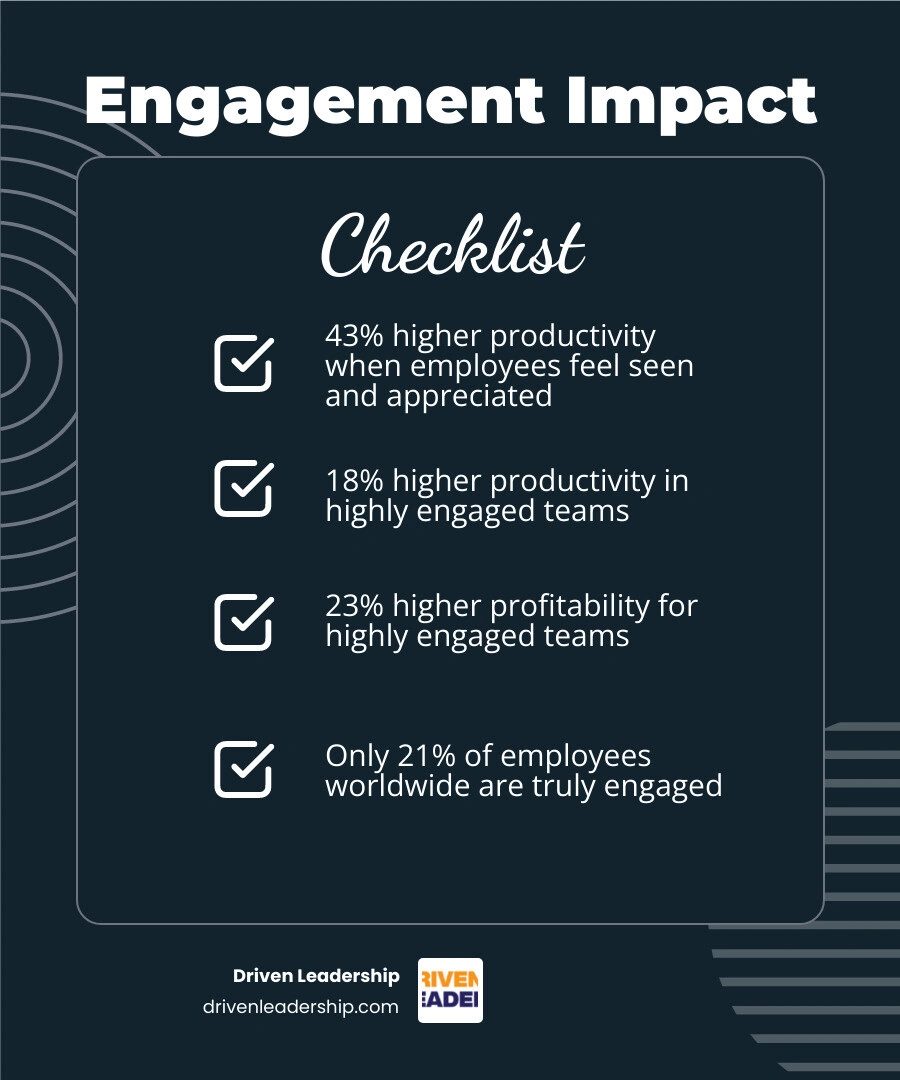
• Morale: Employees who feel seen and appreciated are 43% more productive
• Performance: Highly engaged teams show 18% higher productivity and 23% higher profitability
• Retention: Engaged employees are far less likely to leave — 37% of engaged workers look for new jobs versus 73% of actively disengaged ones
• Culture: Programs that combine recognition, development, and honest feedback shift teams from passive to committed
• Leadership: Managers alone account for 70% of the variance in team engagement levels
If your team feels stuck, disconnected, or just going through the motions, you are not alone. Only 21% of employees worldwide are truly engaged at work. The rest are either checked out or actively working against the culture you are trying to build.
Engage and elevate programs address this directly. Unlike one-off perks or annual surveys, these programs combine structured recognition, leadership development, peer accountability, and continuous feedback into a system that changes how people show up every day. The result is a team that does not just perform — it grows together.
This guide walks you through exactly how these programs work, what makes them effective, and how to put them into practice in your organization.
Understanding the Shift: What is an Engage and Elevate Program?
For years, organizations treated employee engagement like an annual checklist. HR would send out a massive survey, compile the data over three months, and then buy a ping-pong table or host a single pizza party to "boost morale."
But real engagement cannot be bought with pepperoni slices.
To understand why traditional methods fall short, we first have to define what is employee engagement. It is not about basic workplace satisfaction or whether someone likes the office coffee. It is the emotional connection, commitment, and alignment an employee has with their organization, their team, and their work.
When we look closely at any workforce, we see the three types of employees engaged not engaged actively disengaged:
1. Engaged Employees: These individuals are emotionally committed, enthusiastic, and highly proactive. They drive innovation and carry the team forward.
2. Not Engaged Employees: They are present but disconnected. They do the bare minimum to get by, treating their role as a transaction—time exchanged for a paycheck.
3. Actively Disengaged Employees: These team members are unhappy and vocal about it. They can actively damage team morale, breed negativity, and pull down overall performance.
Traditional initiatives target the symptoms of disengagement rather than the root cause. An "Engage and Elevate" program is different. It is a systemic, values-aligned framework designed to transition employees from "not engaged" to "fully engaged" by focusing on holistic development, psychological safety, and clear pathways for growth.
How Engage and Elevate Programs Improve Team Morale and Performance Through Purpose
Human beings are hardwired to seek meaning. When employees do not understand how their daily tasks contribute to the bigger picture, their enthusiasm naturally plummets.
Engage and elevate programs bridge this gap by connecting individual roles to a shared company mission. By implementing deliberate leadership strategies for motivation and engagement, leaders learn to move away from transactional management and toward purpose-driven coaching.
When we ground a team’s daily execution in a shared "why," we unlock intrinsic motivation. Employees stop working just to avoid getting in trouble; they start working because they genuinely care about the quality of the outcome. This sense of shared purpose is a powerful driver of personal growth and professional pride.
Shifting from Basic Satisfaction to High Performance
There is a massive difference between a satisfied employee and an engaged, high-performing one. A satisfied employee might love the flexible hours and the free snacks, but still remain completely disconnected from the company’s goals. They are comfortable, but comfort does not equal contribution.
Our work with high performance teams executive development shows that true organizational growth requires moving beyond surface-level comfort. High performance is built on a foundation of clear accountability, mutual trust, and measurable behavioral change.
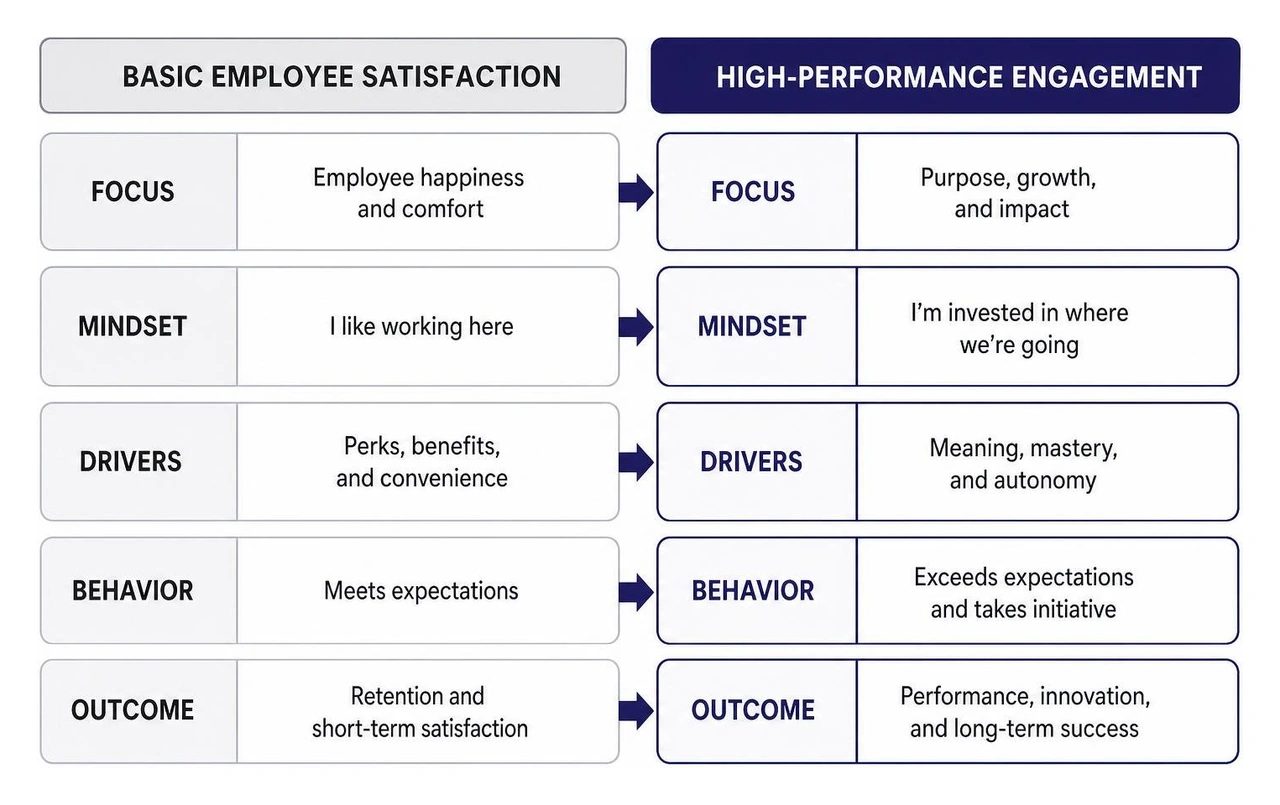
An engage and elevate program does not seek to make the workplace comfortable; it seeks to make it meaningful. It establishes clear performance standards while providing the tools, coaching, and psychological safety employees need to meet those standards.
How Engage and Elevate Programs Improve Team Morale and Performance

When an organization commits to a structured Engage Elevate Program, the benefits ripple across every department. It is not just about making people feel good at work; it is about building a sustainable ecosystem where high morale drives high performance, and high performance reinforces high morale.
This virtuous cycle has a dramatic impact on one of the most critical challenges facing businesses in July 2026: retaining top talent. By understanding how to improve employee retention through better leadership, organizations can build an environment where people want to stay, grow, and contribute over the long haul.
The Direct Impact on Employee Satisfaction and Well-Being
At its core, team morale is a reflection of collective well-being. When employees feel stressed, isolated, or unappreciated, morale plummets, and burnout quickly follows.
Engage and elevate programs target these challenges by establishing a culture of psychological safety. When employees know they can speak up, share ideas, or make mistakes without fear of retaliation, they are far more likely to take creative risks and collaborate openly.
These programs also prioritize:
• Burnout Prevention: By setting clear boundaries, aligning workloads, and encouraging genuine work-life balance.
• Consistent Recognition: Moving away from generic "Employee of the Month" awards and toward personalized, timely, and value-linked appreciation.
• Peer-to-Peer Recognition: Allowing team members to lift each other up, which builds stronger social bonds and reduces the feeling of isolation—a critical factor considering that roughly 33% of remote and hybrid workers report feeling isolated at least some of the time.
Driving Business Outcomes and Team Execution
The business case for these programs is undeniable. Organizations with highly engaged business units see a 23% increase in profitability and an 18% increase in productivity.
Why? Because engaged employees do not just work faster; they work smarter. They are more aligned with corporate goals, more committed to quality, and more proactive in solving problems before they escalate.
This level of alignment is crucial for effective team execution. When a team is highly engaged, they transition from a group of individuals working on separate tasks to a cohesive unit executing a shared strategy.
For teams looking to accelerate this transition, immersive experiences like the forge team execution program provide hands-on training that aligns team behaviors, refines communication, and builds the trust necessary to execute complex business strategies under pressure.
Key Strategies to Elevate Team Performance and Morale
To build a program that lasts, organizations must move away from ad-hoc activities and implement structured, repeatable strategies.
One highly effective approach is integrating gamification into daily workflows. Research shows that gamification at work boosts productivity for 90% of employees and improves overall engagement by 48%. By turning progress tracking, skill development, or values-based recognition into a collaborative, low-pressure game, you tap into natural human desires for achievement and connection.
Additionally, continuous professional development must be woven into the program. When employees see a clear pathway for career growth and skill acquisition, they are 63% less likely to leave their roles.
To help leaders align these strategies, we often utilize how five behaviors workshops help leadership teams improve performance. These workshops focus on building vulnerability-based trust, mastering healthy conflict, securing commitment, accepting accountability, and focusing on collective results.
Designing Inclusive Activities for Hybrid and Remote Teams
Maintaining high morale is particularly challenging in distributed workforces. Without the natural interactions of a physical office, remote and hybrid employees can quickly begin to feel like isolated nodes rather than active team members.
When designing your engage and elevate activities, keep these best practices in mind:
• Prioritize Asynchronous Connection: Do not force remote workers into endless Zoom happy hours. Instead, use digital collaboration tools to share wins, celebrate milestones, and host low-pressure social channels asynchronously.
• Focus on Accessibility: Ensure all virtual team-building activities are inclusive, considering different time zones, physical abilities, and personal comfort levels.
• Keep it Low-Pressure: Participation in social games should feel like an opportunity, not a chore. Keep activities optional, fun, and focused on genuine connection rather than performance.
Why Managers are Key to How Engage and Elevate Programs Improve Team Morale and Performance
You can have the most beautifully designed engagement program in the world, but if your middle managers are not bought in, the program will fail.
The data is clear: the manager or team leader alone accounts for 70% of the variance in team engagement.
Managers are the direct link between corporate strategy and daily execution. To make an engage and elevate program work, managers must transition from "bosses" to "coaches." This means:
• Holding Regular 1:1s: Moving away from status updates and focusing on career development, blocker removal, and personal well-being.
• Practicing Leadership Transparency: Sharing the "why" behind business decisions to build trust and alignment.
• Individualizing Leadership: Recognizing that different employees need different types of support, feedback, and appreciation to thrive.
Frequently Asked Questions About Engage and Elevate Programs
What are the main differences between traditional engagement and engage and elevate programs?
Traditional engagement programs are often transactional and reactive. They rely on annual surveys to gather feedback and use superficial perks—like free snacks, casual dress codes, or occasional social events—to temporarily boost satisfaction.
Engage and elevate programs are systemic and proactive. They focus on long-term behavioral change, continuous listening, and aligning daily work with corporate values. Instead of offering temporary distractions, they provide employees with clear career pathways, ongoing professional development, and a culture of continuous feedback that addresses the psychological needs of the workforce.
How do you measure the ROI of these programs?
Measuring the success of an engage and elevate program requires looking at a combination of qualitative and quantitative data:
• Employee Net Promoter Score (eNPS): Tracked quarterly or monthly to measure overall employee sentiment and advocacy.
• Retention and Turnover Metrics: Comparing voluntary turnover rates before and after program implementation.
• Productivity and Performance Trends: Correlating team engagement levels with key performance indicators (KPIs) and business outcomes.
• Pulse Surveys: Short, frequent surveys that track real-time sentiment on specific topics like psychological safety, role clarity, and manager support.
How can we ensure our engagement activities are inclusive?
Inclusivity must be built into the design phase of any activity. First, understand your team’s preferences through anonymous feedback rather than making assumptions. Ensure that activities do not favor one location (such as the headquarters) over remote branches.
Offer a mix of social, developmental, and volunteer-based activities to appeal to different personality types and physical abilities. Finally, ensure that participation in social activities is genuinely voluntary, so introverted or busy team members do not feel penalized for focusing on their core responsibilities.
Conclusion
Building a high-performing organization is not a one-time project. It requires a deliberate, consistent commitment to creating an environment where people feel valued, challenged, and connected to a shared purpose.
When organizations understand how engage and elevate programs improve team morale and performance, they stop chasing short-term inspiration and start investing in lasting behavioral change.
By empowering your managers, aligning your daily work with core values, and fostering a culture of mutual trust and appreciation, you build a resilient business that can navigate any market challenge.
Are you ready to transform your workplace culture and unlock your team's true potential? Learn more about how we can help you design, implement, and sustain a high-performance workforce by exploring our approach to leading an engaged culture. Let's build a culture that means business, together.