EOS Training vs Traditional Management Coaching for Mid-Sized Companies

Navigating the Growth Ceiling: Which Framework Fits Your Mid-Sized Company?
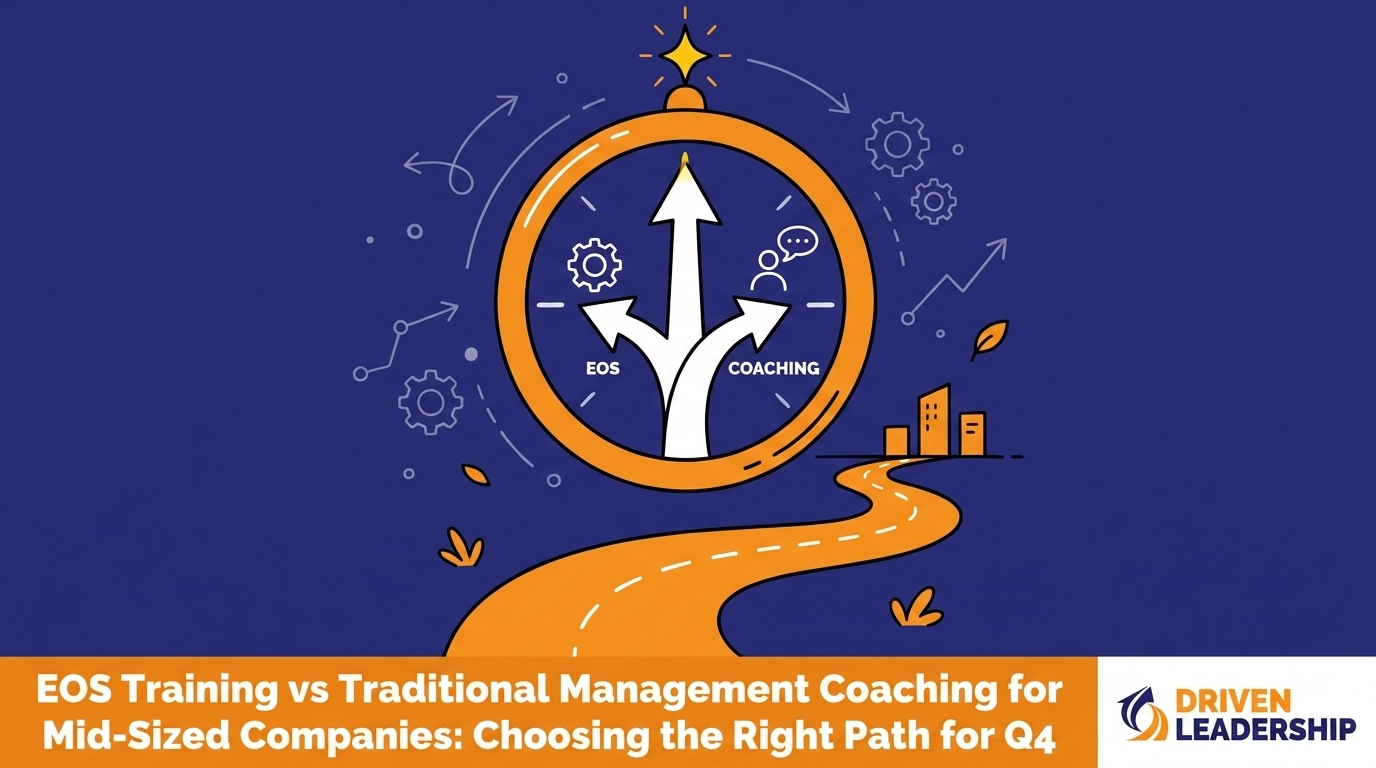
Are you trying to weigh the benefits of EOS Training vs Traditional Management Coaching for Mid-Sized Companies because your organization has hit a growth ceiling where informal communication and ad-hoc leadership simply aren't enough anymore? Stalling out after periods of rapid expansion is a concrete problem that nearly every successful mid-sized business eventually faces. At Driven Leadership, we see this pattern constantly. Operating a growing business in Puyallup and the broader Pacific Northwest can sometimes feel like navigating a ship through dense morning fog—you know the destination is out there, but the immediate path is obscured by daily operational haze. Without a clear compass, leadership teams often find themselves spinning their wheels, solving the same problems week after week.
The core decision point for founders and executives at this stage is determining whether the company requires the strict operational accountability of the Entrepreneurial Operating System (EOS) framework or the individualized behavioral development of traditional coaching. Selecting the right framework acts as that necessary compass, cutting through the operational fog of scaling a business and aligning the leadership team on a unified path forward. If you are ready to establish a definitive direction for your organization, exploring EOS Implementation is a powerful first step.
Decoding the Entrepreneurial Operating System (EOS) Framework
The Entrepreneurial Operating System (EOS) framework is fundamentally about systemic operational cadence rather than individual psychological development. It treats organizational scaling as a structural engineering problem. When our team works with a mid-sized company that has outgrown its early-stage entrepreneurial energy, we often find it requires a rigid, predictable system to ensure that vision translates into execution. EOS provides that structure by focusing on strengthening the foundational pillars of the business.
The Six Key Components of EOS
To fully grasp how this systemic accountability functions, it helps to understand the core areas the framework targets:
1. Vision: Getting the entire leadership team 100% on the same page regarding where the organization is going and exactly how it is going to get there.
2. People: Ensuring the company has the "Right People in the Right Seats," meaning every individual aligns with the core values and has the capacity for their specific role.
3. Data: Cutting through subjective opinions and emotions by running the business on a handful of objective, forward-looking metrics known as a Scorecard.
4. Issues: Creating a transparent environment where problems are called out, isolated, and permanently solved rather than temporarily patched.
5. Process: Documenting and simplifying the core processes that drive the business, ensuring consistency and scalability across all departments.
6. Traction: Instilling discipline and accountability throughout the organization so that the vision actually becomes reality on the ground.
The true power of the Entrepreneurial Operating System (EOS) framework lies in its meeting cadences, specifically the Level 10 Meeting. This highly structured weekly touchpoint forces leadership teams to focus on high-priority issues, review measurable scorecards, and hold each other accountable to quarterly goals (Rocks). For mid-sized companies—typically those with 10 to 250 employees—this level of operational rigidity replaces the chaos of "management by walking around" with a predictable, scalable rhythm.
The Role of Traditional Management Coaching in Behavioral Growth
While systemic frameworks solve structural problems, traditional management coaching targets the human element of scaling a business. A company can have perfect scorecards and flawless processes, but if the leadership team lacks emotional intelligence, struggles with conflict resolution, or fails to communicate effectively, growth will inevitably stall. Coaching focuses on individual behavioral growth, interpersonal dynamics, and executive presence.
Addressing the Human Element of Leadership
Traditional coaching is highly individualized. It steps in when leaders encounter psychological or interpersonal roadblocks that a structural framework cannot fix. Active listening, empathetic communication, and decisive action are skills that require nuanced, personalized development. A rigid meeting agenda cannot teach a hesitant executive how to command a room or navigate a difficult conversation with an underperforming manager.
For instance, one leader who completed our BOLD: Advanced Leadership training earlier this summer noticed a distinct lack of confidence and hesitation to take charge during critical meetings. This behavioral bottleneck was not just impacting the management team; it was bleeding into their personal life as well. Through immersive and challenging coaching interventions with our facilitators, this individual developed increased confidence and improved active listening skills, leading to immediate positive changes at work. This is the exact type of behavioral transformation that traditional coaching facilitates.
As organizations approach the late summer transition into Q4 strategic planning, overwhelmed leaders often realize they lack the interpersonal tools to guide their teams through end-of-year stress. Implementing a framework for overwhelmed managers through targeted coaching empowers executives to navigate complex interpersonal roadblocks, build resilience, and foster a healthier, more productive organizational culture.
Systemic Cadence vs Behavioral Growth: A Side-by-Side Comparison
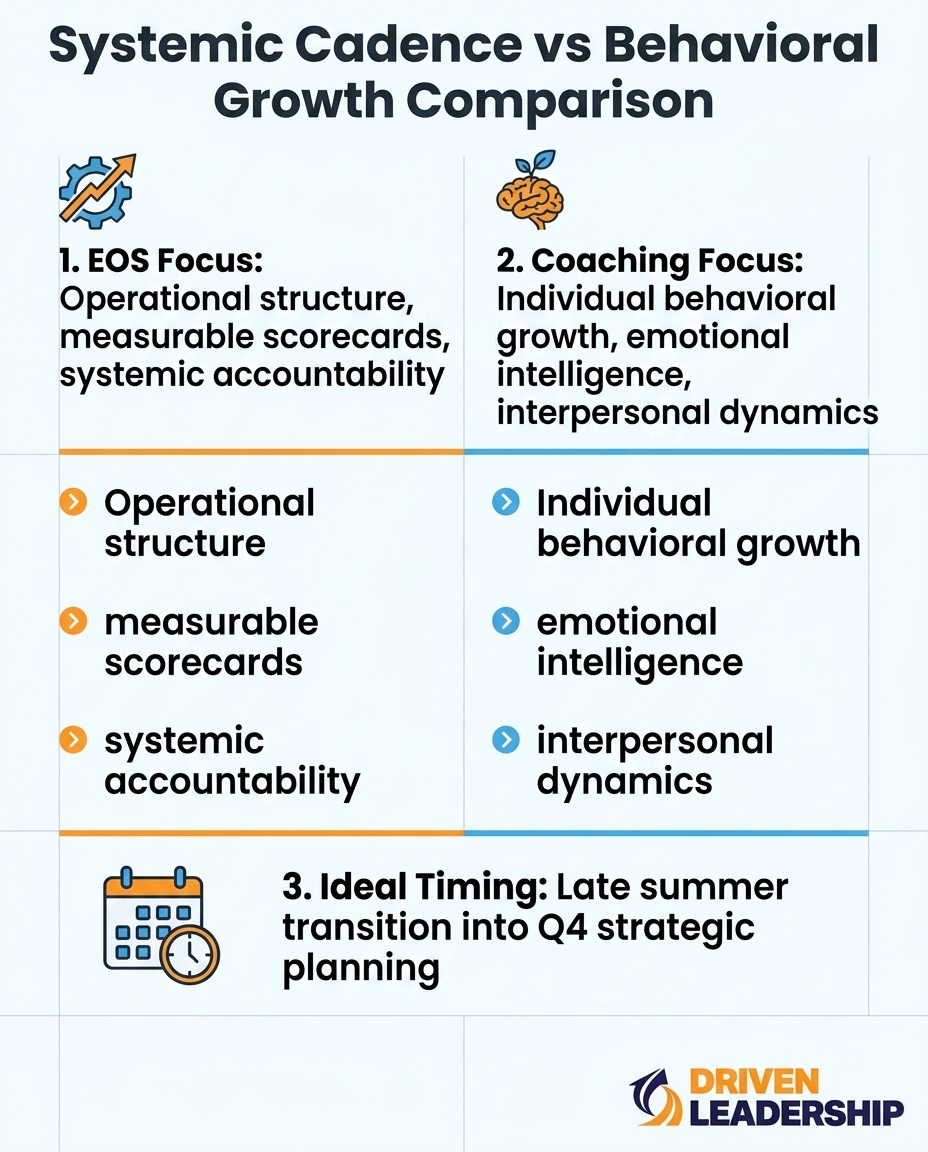
Understanding the distinct differences between these two approaches is critical for making an informed decision. The following comparison highlights how the Entrepreneurial Operating System (EOS) framework contrasts with individualized coaching across several key dimensions.
• Primary Objective — Systemic Cadence (EOS Training): Operational structure, process alignment, and systemic accountability. — Behavioral Growth (Traditional Coaching): Individual behavioral growth, emotional intelligence, and interpersonal dynamics.
• Implementation Timeline — Systemic Cadence (EOS Training): Structured roll-out over 12 to 24 months with rigid quarterly pulses. — Behavioral Growth (Traditional Coaching): Flexible, ongoing engagements tailored to the individual's pacing and needs.
• Ideal Company Size — Systemic Cadence (EOS Training): Mid-sized businesses (10-250 employees) needing scalable processes. — Behavioral Growth (Traditional Coaching): Any size, specifically targeting key executives or struggling managers.
• Outcome Measurement — Systemic Cadence (EOS Training): Objective scorecards, revenue metrics, and quarterly goal completion (Rocks). — Behavioral Growth (Traditional Coaching): Behavioral assessments, 360-degree reviews, and observed cultural shifts.
• Core Bottleneck Solved — Systemic Cadence (EOS Training): Lack of organizational direction, chaotic meetings, and inconsistent execution. — Behavioral Growth (Traditional Coaching): Poor communication, leadership hesitation, and toxic team dynamics.
Diagnosing Your Bottleneck: Structure vs. Leadership Nuance
To choose the correct path, a mid-sized company must accurately diagnose the root cause of its growth ceiling. The symptoms of a stalled organization often look similar on the surface—missed targets, frustrated employees, and exhausted founders—but the underlying causes require entirely different interventions.
Problem: The Organization is Spinning its Wheels
When a company hits a plateau, the immediate reaction is often to work harder. However, throwing more hours at a systemic issue only accelerates burnout. The critical task is determining whether the failure stems from a lack of process or a lack of leadership capability.
Cause: Identifying the Root Bottleneck
If meetings are chaotic, goals are unclear, and every department operates in a silo, the bottleneck is structural. The company lacks a unified operating system, making the Entrepreneurial Operating System (EOS) framework the logical solution. Conversely, if the company has clear goals and documented processes, but the leadership team is crippled by passive-aggression, fear of conflict, or an inability to hold direct reports accountable, the bottleneck is behavioral. This requires the nuanced intervention of management coaching.
Solution: Bridging the Gap with Real-World Expertise
Often, mid-sized companies encounter debilitating roadblocks that require a blend of both structural accountability and personal growth. For example, during a recent late-summer session of our challenging BOLD program, one participant grappling with personal and professional limitations discovered that their self-perception was the actual bottleneck holding their team back. Through intense coaching, they experienced significant personal growth that ultimately allowed them to execute structural business goals more effectively.
Working with our team at Driven Leadership means gaining a partner equipped to deliver measurable, structured accountability rather than just open-ended, theoretical advice. This real-world experience in driving organizational development bridges the gap between rigid training and nuanced coaching. These two approaches are not mutually exclusive; they are highly complementary when sequenced correctly during different phases of an organization's growth journey.
Why the Late Summer Transition is Critical for Implementation
Timing is a crucial factor in organizational development. We typically see many leadership teams make the strategic mistake of waiting until January to address operational bottlenecks, assuming the new year is the best time for a fresh start. In reality, waiting until January means spending the entire first quarter just learning the new system, effectively writing off the first half of the year's growth potential.
The Window of Opportunity: As we move into the back-to-school transition, the late summer shift into Q4 strategic planning represents the optimal window to evaluate and select a leadership framework. By late August and September, the chaotic summer vacation schedules have stabilized, and leadership teams are naturally shifting their focus toward end-of-year targets and the upcoming fiscal year.
Ensuring Leadership Alignment: Implementing a new cadence during this late summer transition into Q4 strategic planning ensures the leadership team is fully aligned before the pressure of end-of-year transitions hits. If an organization chooses to implement EOS, establishing the foundational tools in September means the team will be actively using the framework to set their Q4 Rocks and annual goals. If they choose coaching, leaders have the time to develop critical communication skills before performance review season begins.
The Implementation Timeline: Decisions made in late summer directly impact Q4 performance. A September rollout allows for a 30-day adjustment period, meaning by November, the new meeting cadences or behavioral strategies are firmly embedded in the company culture. This proactive approach guarantees that the organization hits the ground running on January 1st with a clear, tested compass in hand.
Frequently Asked Questions About Leadership Frameworks
What is the difference between an EOS implementer and a business coach?
An EOS implementer is a teacher and facilitator who strictly follows the Entrepreneurial Operating System (EOS) framework to install structural accountability. They do not deviate from the system's specific tools and meeting cadences. A business coach, on the other hand, provides open-ended, individualized guidance focused on the behavioral, psychological, and interpersonal development of the leader themselves.
Does EOS replace leadership coaching?
No, EOS does not replace leadership coaching; the two serve entirely different purposes. While the Entrepreneurial Operating System (EOS) framework provides the operational structure for the business, traditional coaching develops the emotional intelligence and communication skills required for leaders to effectively manage the human beings operating within that structure.
Is EOS right for my mid-sized company?
EOS is generally ideal for mid-sized companies (typically 10 to 250 employees) that have outgrown their initial startup phase and are experiencing growing pains due to a lack of documented processes and accountability. If your leadership team struggles with alignment, chaotic meetings, and inconsistent execution, implementing the Entrepreneurial Operating System (EOS) framework is likely the correct next step.
What happens when a company outgrows its management style?
When a company outgrows its early management style, it hits a growth ceiling characterized by internal friction, dropped balls, and stagnant revenue. Informal communication breaks down, and what worked for a team of five completely fails for a team of fifty. To break through this ceiling, the organization must adopt a scalable structural framework or invest in advanced leadership development.
Can a mid-sized company utilize both EOS and traditional coaching simultaneously?
Yes, utilizing both approaches simultaneously is often the most effective strategy for mature mid-sized companies. The Entrepreneurial Operating System (EOS) framework provides the necessary business cadence and measurable goals, while traditional coaching ensures the executive team has the emotional resilience and interpersonal skills necessary to execute those goals without burning out their departments.
Take the Next Step in Your Organizational Development
Choosing between EOS Training vs Traditional Management Coaching for Mid-Sized Companies ultimately depends on accurately diagnosing your specific growth bottlenecks. If your primary pain points are structural chaos and a lack of process, a rigid operational cadence will provide the necessary alignment. If your barriers are rooted in communication breakdowns, hesitation, or interpersonal conflict, individualized behavioral growth is the required solution.
Making this determination during the late summer transition into Q4 strategic planning ensures your organization is prepared to tackle the upcoming year with clarity and purpose. You do not have to navigate this decision alone. To gain a clear, objective breakdown of which approach matches your current organizational needs, explore our Executive Manager Program and speak with an expert at Driven Leadership who can help you implement a definitive framework for lasting success.